SLIDE 1

SOLAR CELL

SLIDE 2

SOLAR CELL

SLIDE 3

SOLAR CELL

SLIDE 4

SOLAR CELL

SLIDE 5

SOLAR CELL

Monday, 1 April 2013

whether vaccine for common cold is possible?


At the moment, influenza, or “flu” is a disease which kills many thousands of people despite the availability of a different vaccine every year. A new flu vaccine has to be manufactured each year to accommodate the changes that are seen in the flu virus. The virus mutates, which means different antibodies are needed to recognise it.

The parts of the flu virus which mutate are surface proteins called haemagglutinins.  These haemagglutinin proteins are composed of a “head” and a “stem” region. The head region is the part of the protein which changes slightly – a process which can be known as “drift”.

A flu vaccine usually contains dead or weakened versions of the flu virus, so that the body produces antibodies which are complementary to the viral haemagglutinins. These antibodies can then fight the flu virus if the vaccinated person becomes infected, inducing the immune system to get rid of the virus in order to avoid illness.

However, a flu vaccine will only work for the specific virus the person is vaccinated against. If the viral proteins drift (mutate) then the antibodies the body has made will not work, because they are no longer complementary to the proteins. This is why a new flu vaccine is manufactured every year. But new scientific advances hope to change this one day.

Scientists are working towards creating a vaccine which will induce antibodies which attack the stem of the haemagglutinin viral surface protein. Unlike the head region, the stem of the haemagglutinin molecule does not mutate, so antibodies which attack the stem will work against any strain of the flu virus. Because the immune system “remembers” molecular regions it has encountered before, these antibodies will be produced each time a person is infected with a flu virus – which all have the same haemagglutinin stem. It is hoped for this reason that the immunity to the flu virus will be long lasting, and stop the need for different flu vaccines each year.

This technology is still in its early stages, and we are unlikely to be seeing a universal flu vaccine being produced very soon. But scientists hope that it will progress well in the next few years, and could be within our reach in a decade’s time.

What attracts us in violent movies


A recent study from researchers at the University of Augsburg, Germany and the University of Wisconsin-Madison found that people are more likely to watch movies with gory scenes of violence if they felt there was meaning in confronting violent aspects of real life.
Anne Bartsch, University of Augsburg, Germany and Louise Mares, University of Wisconsin-Madison, will present their findings at the 63rd Annual Conference of the International Communication Association. Their study examined whether these serious, contemplative, and truth-seeking motivations for exposure to violent portrayals are more than just an intellectual pleasure. They invited a large binational sample from Germany and the US (total of 482 participants), ranging in age from 18-82, and with varying levels of education. Participants viewed film trailers featuring different levels of gore and meaningfulness, and rated their likelihood of watching the full movie. They also indicated their perceptions of the film (how gory, meaningful, thought-provoking, suspenseful, etc.).
Earlier studies have suggested that audiences are not necessarily attracted to violence per se, but seem to be drawn to violent content because they anticipate other benefits, such as thrill and suspense.
What attracts people to violent movies?These findings suggest that such hedonistic pleasures are only part of the story about why we willingly expose ourselves to scenes of bloodshed and aggression. Some types of violent portrayals seem to attract audiences because they promise to satisfy truth-seeking motivations by offering meaningful insights into some aspect of the human condition.
“Perhaps depictions of violence that are perceived as meaningful, moving and thought-provoking can foster empathy with victims, admiration for acts of courage and moral beauty in the face of violence, or self-reflection with regard to violent impulses,” said Bartsch. “Examining the prevalence of such prosocial responses and the conditions under which they occur offers a theoretically intriguing and socially valuable direction for further work.”
“The Role of Perceived Meaningfulness in Audience Attraction to Violent Media Content: Experimental Results From Germany and the US.” To be presented at the 63rd Annual Conference of the International Communication Association, June 17-21, 2013, London, England.

Swarm Robots - the future Servents of our home


Researchers in the Sheffield Centre for Robotics, jointly established by the University of Sheffield and Sheffield Hallam University, have been working to program a group of 40 robots, and say the ability to control robot swarms could prove hugely beneficial in a range of contexts, from military to medical.
The researchers have demonstrated that the swarm can carry out simple fetching and carrying tasks, by grouping around an object and working together to push it across a surface.
The robots can also group themselves together into a single cluster after being scattered across a room, and organize themselves by order of priority.
Dr Roderich Gross, head of the Natural Robotics Lab, in the Department of Automatic Control and Systems Engineering at the University of Sheffield, says swarming robots could have important roles to play in the future of micromedicine, as ‘nanobots’ are developed for non-invasive treatment of humans. On a larger scale, they could play a part in military, or search and rescue operations, acting together in areas where it would be too dangerous or impractical for humans to go. In industry too, robot swarms could be put to use, improving manufacturing processes and workplace safety.
Swarming robots could be the servants of the futureThe programming that the University of Sheffield team has developed to control the robots is deceptively simple. For example, if the robots are being asked to group together, each robot only needs to be able to work out if there is another robot in front of it. If there is, it turns on the spot; if there isn’t, it moves in a wider circle until it finds one.
Dr Gross said: “We are developing Artificial Intelligence to control robots in a variety of ways. The key is to work out what is the minimum amount of information needed by the robot to accomplish its task. That’s important because it means the robot may not need any memory, and possibly not even a processing unit, so this technology could work for nanoscale robots, for example in medical applications.”
This research is funded by a Marie Curie European Reintegration Grant within the 7th European Community Framework Programme. Additional support has been provided by the Engineering and Physical Sciences Research Council.

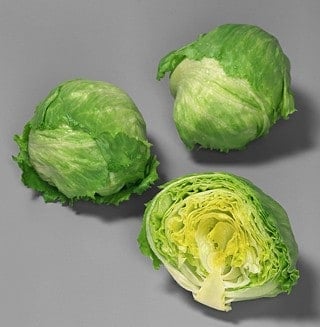
Hot weather causes sprouting in lettuce


The study also included researchers from Arcadia Biosciences and Acharya N.G. Ranga Agricultural University, India.
The finding is particularly important to the nearly $2 billion lettuce industries of California and Arizona, which together produce more than 90 percent of the nation’s lettuce. The study results appear online in the journal The Plant Cell.
“Discovery of the genes will enable plant breeders to develop lettuce varieties that can better germinate and grow to maturity under high temperatures,” said the study’s lead author Kent Bradford, a professor of plant sciences and director of the UC Davis Seed Biotechnology Center.
“And because this mechanism that inhibits hot-weather germination in lettuce seeds appears to be quite common in many plant species, we suspect that other crops also could be modified to improve their germination,” he said. “This could be increasingly important as global temperatures are predicted to rise.”
Most lettuce varieties flower in spring or early summer and then drop their seeds — a trait that is likely linked to their origin in the Mediterranean region, which, like California, characteristically has dry summers. Scientists have observed for years that a built-in dormancy mechanism seems to prevent lettuce seeds from germinating under conditions that would be too hot and dry to sustain growth. While this naturally occurring inhibition works well in the wild, it is an obstacle to commercial lettuce production.
A head for all seasons: Lettuce that sprouts in hot weatherIn the California and Arizona lettuce industries, lettuce seeds are planted somewhere every day of the year — even in September in the Imperial Valley of California and near Yuma, Ariz., where fall temperatures frequently reach 110 degrees.
In order to jump-start seed germination for a winter crop in these hot climates, lettuce growers have turned to cooling the soil with sprinkler irrigation or priming the seeds to germinate by pre-soaking them at cool temperatures and re-drying them before planting — methods that are expensive and not always successful.
In the new study, researchers turned to lettuce genetics to better understand the temperature-related mechanisms governing seed germination. They identified a region of chromosome six in a wild ancestor of commercial lettuce varieties that enables seeds to germinate in warm temperatures. When that chromosome region was crossed into cultivated lettuce varieties, those varieties gained the ability to germinate in warm temperatures.
Further genetic mapping studies zeroed in on a specific gene that governs production of a plant hormone called abscisic acid — known to inhibit seed germination. The newly identified gene “turns on” in most lettuce seeds when the seed is exposed to moisture at warm temperatures, increasing production of abscisic acid. In the wild ancestor that the researchers were studying, however, this gene does not turn on at high temperatures. As a result, abscisic acid is not produced and the seeds can still germinate.
The researchers then demonstrated that they could either “silence” or mutate the germination-inhibiting gene in cultivated lettuce varieties, thus enabling those varieties to germinate and grow even in high temperatures.
Other researchers on the study were: Post-doctoral researcher Heqiang Huo and staff researcher Peetambar Dahal, both of the UC Davis Department of Plant Sciences; Keshavulu Kunusoth of Acharya N.G. Ranga Agricultural University, India; and Claire McCallum of Arcadia Biosciences, which provided the lettuce lines with variants of the target gene to help confirm the study’s findings.

Vaccines are not the cause for autism


A primary concern is the number of vaccines administered, both on a single day and cumulatively over the first 2 years of life. In a new study scheduled for publication in The Journal of Pediatrics, researchers concluded that there is no association between receiving “too many vaccines too soon” and autism.
Dr. Frank DeStefano and colleagues from the CDC and Abt Associates, Inc. analyzed data from 256 children with autism spectrum disorder (ASD) and 752 children without ASD (born from 1994-1999) from 3 managed care organizations. They looked at each child’s cumulative exposure to antigens, the substances in vaccines that cause the body’s immune system to produce antibodies to fight disease, and the maximum number of antigens each child received in a single day of vaccination.
The researchers determined the total antigen numbers by adding the number of different antigens in all vaccines each child received in one day, as well as all vaccines each child received up to 2 years of age. The authors found that the total antigens from vaccines received by age 2 years, or the maximum number received on a single day, was the same between children with and without ASD. Furthermore, when comparing antigen numbers, no relationship was found when they evaluated the sub-categories of autistic disorder and ASD with regression.
Autism not increased by too many vaccines too soonAlthough the current routine childhood vaccine schedule contains more vaccines than the schedule in the late 1990s, the maximum number of antigens that a child could be exposed to by 2 years of age in 2013 is 315, compared with several thousand in the late 1990s. Because different types of vaccines contain varying amounts of antigens, this research acknowledged that merely counting the number of vaccines received does not adequately account for how different vaccines and vaccine combinations stimulate the immune system. For example, the older whole cell pertussis vaccine causes the production of about 3000 different antibodies, whereas the newer acellular pertussis vaccine causes the production of 6 or fewer different antibodies.
An infant’s immune system is capable of responding to a large amount of immunologic stimuli and, from time of birth, infants are exposed to hundreds of viruses and countless antigens outside of vaccination. According to the authors, “The possibility that immunological stimulation from vaccines during the first 1 or 2 years of life could be related to the development of ASD is not well-supported by what is known about the neurobiology of ASDs.” In 2004, a comprehensive review by the Institute of Medicine concluded that there is not a causal relationship between certain vaccine types and autism, and this study supports that conclusion.

TOP 20 “Most Competitive” Auto Parts Suppliers—Chassis Parts

We here list the top 20 engine & powertrain suppliers (Listed In alphabetical order)for your reference.


1. Bosch (China) investment Ltd.Suzhou Branch
2. ZF Shanghai Steering Co.,Ltd.
3. Shanghai GKN Drive Shaft Co., Ltd.
4. MICHELIN Group (China)
5. ThyssenKrupp Fawer liaoyang Spring Co. Ltd
6. Shandong Gold Phoenix Group Corporation
7. Ningbo Ruitai Auto Parts Manufacturing Ltd.
8. Shaanxi HanDe Axle Co., Ltd.
9. Dicastal Wheel Manufacturing Co., Ltd.
10. Nanjing Standard Fittings Factory
11. Hubei Tri-ring Clutches Co., Ltd.
12. Shanghai Tailifu Auto Parts Co., Ltd.
13. Shanghai Sachs Powertrain Components Systems Co., Ltd.
14. Shanghai Yunliang Steering Knuckle Co., Ltd.
15. Shanghai Baolong Automotive Corporation
16. Wuhu Bethel Automotive Safety Systems Co., Ltd.
17. XuChang YuanDong Drive Shaft Co.,Ltd.
18. Wafangdian-Hongda C.V. Joint Manufacture Co., Ltd.
19. Dongfeng Motor Suspension Spring Co., Ltd.
20. Zhejiang Changtai Machine Co., Ltd.


Tuesday, 27 November 2012

Innovation

Many of us don't know the real meaning of innovation.The below shown slide will help you more in understanding it.


Robotics


Thursday, 11 October 2012

Lamborgini Gallardo Technical Specification

Engine
Type : V10 5.2 litres
Power : 550 hp @ 8,000 rpm (410 kW)
Torque : 398 lb·ft @ 6,500 rpm (540 N·m)
Induction : Atmospheric
Power to weight ratio : N/A
Bore : 84 mm
Stroke : 92 mm
Fuel type : Premium
CO2 emissions : 7,400 kg/year
Ohter engines : none
Transmission :
  • 6-speed manual (base)
  • 6-speed automatic
Drivetrain : RWD
Vehicle type / Category 
Vehicle type : Coupe
Category : GT / Sport Performance
Assembly : Sant'Agata, Italie
Generation : 1
What's new : No major change
Fuel efficiency / Autonomy
City : 19.6 l/100km
Highway : 11.8 l/100km
Autonomy : 459 km
Tires / Suspension / Brakes / Safety
Steering : rack and pinion with assist
Traction control : yes
Stability control : yes
Seat belts : 2
Airbags : 4
Front suspension : independent, double wishbones
Rear suspension : independent, double wishbones
Front brakes : disc (ABS)
Rear brakes : disc (ABS)
Front tires : P255/35ZR19
Rear tires : P295/30ZR19
Dimensions / Weight
Length : 4,345 mm (171″)
Width : 1,900 mm (75″)
Height : 1,165 mm (46″)
Wheelbase : 2,560 mm (101″)
Front track : 1,632 mm (64″)
Rear track : 1,597 mm (63″)
Weight : 1,380 kg (3,042 lbs)
Weight distribution front-rear : 43% - 57%
Capacities 
Fuel tank : 90 l (24 gal)
Trunk : 110 l (4 ft3)
Towing : N/A
Box length : N/A
Performance 
0-100 km/h : 3.9 s
80-120 km/h : N/A
Top speed : 320 km/h
Braking distance : N/A
Warranty
Base warranty : 3 years / unlimited
Powetrain warranty : 3 years / unlimited
Insurability rating : N/A


Bugatti Veyron - Technical Specification

Bugatti Veyron Specification
Engine Type Petrol
Engine Description
Engine Displacement(cc) 8000cc W16 Turbocharged
No. of Cylinders
Maximum Power 987 Bhp @ 6000 rpm
Maximum Torque 1250 Nm @ 2200 rpm
Valves Per Cylinder
Valve Configuration
Fuel Supply System
Turbo Charger
Super Charger
Bugatti Veyron Transmission
Transmission Type
Gear box 7 Automatic
Drive Type
Bugatti Veyron Suspension System
Front Suspension NA
Rear Suspension NA
Bugatti Veyron Steering
Steering Type Tilt
Steering Column
Steering Gear Type 7 Automatic
Bugatti Veyron Brake System
Front Brake Type Front Ventilated
Rear Brake Type Rear Disk
Bugatti Veyron Performance
Top Speed 408
Acceleration (0-100 kmph)
Bugatti Veyron Fuel
Mileage-City (kmpl)
Mileage-Highway (kmpl) 35.0 kmpl.
Fuel Type 20.0 kmpl
Fuel Tank Capacity (litres) 100.00
Emission Norm Compliance
Bugatti Veyron Tyres
Tyre Size 0
Alloy Wheel Size
Bugatti Veyron Other Specifications
Seating Capacity 2
No of Doors 3
Bugatti Veyron Payload & Towing
Cargo Volume
General Bugatti Veyron Car Details
Country of Assembly Indonesia
Country of Manufacture Indonesia

Lamborgini Aventador- Technical Specification

Chassis and body

Frame:
Carbon fiber monocoque with Aluminium front and rear frames
Body:
Carbon fiber engine bonnet; movale spoiler and side air inlets; Aluminium front bonnet, front fenders and doors; SMC rear fender and rocker cover
Mirrors:
External mirror electrically foldable
Rear spoiler:
Moveable -3 positions depending on speed and drive select mode

Suspension

Suspension:
Front and rear horizontal monotube damper with push-rod system

Tyres and wheels

ESP:
ESP/ ABS with different ESP characteristics managed by drive select mode
Steering:
Steering Gear with 3 different servortonic characteristics managed by drive select mode
Front tires:
Pirelli 255/35 ZR19
Rear tires:
Pirelli 335/30 ZR20
Front wheels:
19’’ x 9J
Rear wheels:
20’’ x 12J
Curb-to-curb turning circle:
12.5 m (41.0 ft)

Airbags

Airbags:
Front dual stage driver airbag and front adaptive passenger airbag; seats with side “head-thorax” airbags; passenger and driver knee airbags

Brakes

Brakes:
Dual hydraulic circuit brake system with vacuum brake booster; front and rear CCB, 6-cylnder brake callipers, 4-cylinder brake callipers Ø 400x 38 mm – Ø 380 x 38 mm

Engine

Type:
V12, 60°, MPI
Displacement:
6,498 cm³ (396.5 cu.in.)
Bore and stroke:
Ø 95 mm x 76,4 mm
Valve gear:
Variable valve timing electronically controlled
Compression ratio:
11.8  (± 0.2) : 1
Maximum power:
700 HP (515 kW) @ 8,250 RPM
Maximum torque:
690 Nm (507 lbft) @ 5,500 RPM
Emission class:
EURO 5 – LEV 2
Emission control system:
Catalytic converters with lambdasensors
Cooling system:
Water and oil cooling system in the rear with variable air inlets
Engine management system:
Lamborghini Iniezione Eletronica (LIE) with Ion current analysis
Lubrification system:
Dry sump

Drivetrain

Type of transmission:
4WD with Haldex generation IV
Gearbox:
7 speed ISR, shifting characteristic depending on drive select mode
Clutch:
Dry Double plate clutch, Ø 235 mm
Standard:
AMT

Performance

Top speed:
350 km/h (217 mph)
Acceleration 0-100 km/h (0-62 mph):
2.9 s

Dimensions

Wheelbase:
2,700 mm (106.30 in)
Overall length:
4,780 mm (188.19 in)
Overall width (excluding mirrors):
2,030 mm (79.92 in)
Overall width (including mirrors):
2,265 mm (89.17 in)
Overall height:
1,136 mm (44.72 in)
Front track:
1,720 mm (67.72 in)
Rear track:
1,700 mm (66.93 in)
Dry weight:
1,575 kg (3,472 lb)
Weight/Power:
2.25 kg/HP (4.96 lb/HP)
Weight distribution (front - rear):
43 % - 57 %

Capacities

Fuel tank capacity:
90 l (23.8 gal.)
Engine oil capacity:
13 l (3.4 gal.)
Engine coolant capacity:
25 l (6.6 gal.)

Fuel consumption *

Urban cycle consumption:
27.3 l/100 km
Extra urban consumption:
11.3 l/100 km
Combined consumption:
17.2 l/100 km
CO2 emission:
398 g/km

Lamborgini Gallardo

 Lamborghini's 'entry-level' car, the Gallardo LP560-4, has been updated for the latest model year with a slight exterior restyling. The changes should help the model retain its best-selling status among the Italian supercar maker's stable of offerings.

The front fascia gets more triangles in its corners, which are really feeds for the brake-cooling ducts. The rear bumper is also much more angular, though here, the taillights are changed as well. There are new 19-inch wheels as well, covered with an Apollo Polish. The rear spoiler is electronically controlled and rises at speed to enhance traction.


The engine remains untouched, with the same 5.2-liter 10-cylinder in a V configuration that pumps out a fiery 552 horsepower at 8,000 rpm and 398 ft-lbs of torque at 6,500 rpm. That's enough power to hit 62 mph in an impressive 4.0 seconds, according to Lamborghini's own estimates and reach on a top speed of 201mph. It's paired exclusively with E-gear, the automaker's six-speed, automated-manual transmission with two shift paddles instead of a third pedal. For those wishing to operate three pedals and row for themselves, Lamborghini will offer them a manual in the other, more performance-oriented versions of the Gallardo.

All that power then travels to all four wheels, as the 4 in the model name indicates. Each of the 19-inch wheels puts down a big footprint, with the fronts being 235mm wide and the rears 295mm. When the smallest bull needs to be reigned in, it relies on eight-piston front calipers squeezing 14.4-inch discs up front and 4-piston, 14-inch brakes in the rear.

Fuel economy - hardly a priority in this class - is rated at 13/20 with the E-gear city/highway, and 16mpg overall.

Those looking for a wind-in-your-hair experience should check out the Gallardo LP560-4 Spyder.

Wednesday, 3 October 2012

Rolls Royce Ghost Six Senses


The Rolls Royce Ghost Six Senses concept can be defined as richness included in the purest kind. If its final luxury you're looking for, you can be assured that this Ghost Six Senses will not are not able to deliver. Rolls Royce has claimed that the thought vehicle is designed plus produced to help appeal to an individual's sensory awareness and this just might hold correct. However, that may again depend on how much (or even little, which can be unlikely) of the fan you happen to be of the businesses luxury shows. The Half a dozen Senses thought was launched at the Beijing Auto Show while using the intention of getting luxury indulgence to an all-new amount.

Rolls Royce Ghost Six Senses shown at Beijing Auto Show 2012


PLANET FORMATION IN OUR SOLAR SYSTEM MAY HAVE BEEN STAGGERED

New research by Tagir Abdylmyanov, an associate professor from Kazan State Power Engineering University in Russia, suggests our solar system’s planets may have formed at differing times, which were determined by shock waves which came flowing from the young sun. The research also suggests Earth, Mercury, Venus and Mars are the youngest planets in the solar system. This work presents a new way in which scientists can predict where planets form in young solar systems.

Abdylmyanov based his work on a solar system formation theory proposed by Japanese astrophysicists in 1985 in the book "Protostars and Planets II”. In it, the Japanese scientists suggested that the solar system began with a solar nebula that gradually evolved to form clumps of dust that gelled to make protoplanets and then planets. Abdylmyanov adapted his own mathematical models to take this previous research even further, by suggesting the planets formed at different times instead of all at the same time.

Abdylmyanov modelled the movement of particles in fluids and gases inside the gas cloud from which our sun formed and theorised that the movements of this material would have created shockwaves as the sun evolved. His work suggests that each series of shockwaves created a series of debris rings around the sun that accreted over millions of years into planets. The modern distance between the orbits of the planets is assumed to be the result of the action of the shock waves and the solar activity when the star was forming.

The first series of shockwaves, which came from short but very rapid changes in solar activity, would have created the protoplanetary rings for Uranus, Neptune and dwarf planet Pluto, very close in time to the sun’s birth. 3 million years later, less powerful shockwaves created the debris ring which ultimately became Saturn, and then 500,000 years later Jupiter’s debris ring may have formed. Shock waves about a million years after that, when the sun was far calmer, created the asteroid belt; 500,000 years after that would see the creation of the protoplanetary rings for Mercury, Venus, Earth and Mars.

Abdylmyanov’s research also shows that gas and dust accretions could have caused accelerated planetary formation from the protoplanetary rings. This would likely favour the formation of only one planet from that ring, rather than several.

Scientists can study the brightness of stars in the process of forming to find indications as to the intensity of the stellar shock waves, and then may be able to predict the location of planets around stars millions of years before they have formed.


Bugatti Veryon -17.4 Grand Sport Vitesse The year 2013

The Bugatti Veyron 17.4 Grand Sport Vitesse The year 2013 is the carmaker's top goal involved with bringing this achievements of your Super Sport at the convertible, defining it as the fastest van of its classification in the world. Unsurprisingly a top lower version on the Super Sport will take quite a lot of considering and archaeologist, but Bugatti is not an stranger within the concept of breaking the limits and exceeding goals.The sports car is commited by the 8.0 liter W16 engine that generates no more or maybe less than 1100 horsepower for 6400 RPM, along with an astonishing 1106 lb-ft from torque through 3000 that will 5000 Revoltions per minute. Evidently any Grand Sport shares several other parts with the Very Sportincluding the four even larger turbochargers, the intercooler and the quad fuel air pump setup in order to name a few.Relating to performance I do think there's no puzzle here. That Grand Sport goes out of 0 for you to 60 miles-per-hour in under Couple of.6 secs, from a grinding halt to 124 mph in only 5.1 mere seconds and by 0 to be able to 186 in 17 seconds. Just what about the top notch speed? The Grand Sport can go up to successfully 255 mph, reliable a bit of a hook. Evidently the rooftop needs to be upon in order to achieve topping speed, owing to the roof along the aerodynamics modify and it is affecting how the supercar runs on the road. Still, Bugatti had to implement a few improvements when the top is shut off. For instance, a corner wing has learned when the hardtop may be detached plus it changes its angle as a way to increase downforce and aerodynamics. They additionally had to restrict the car's top momentum while in sports car mode in order to 233 mph.Apparently in order to achieve these kinds of performance you'll want to burn a number of fuel for pretty sure the fact that whoever plans on buying a Grand Sport will not take into account fuel efficiency while this, but just to present you with an idea of exactly how extreme this specific piece of engineering is, by full reduce the 8 liter W16 may burn it happens to be entire water tank of 27.4 gallons connected with gas on eight a few minutes and will gulp more environment in one per hour than a people in one 30 days.As is custom, the Grand Sport has generated with no skimp and you still obtain the same higher level of luxury found in the previous models. It's really a civilized sporty car and offers a pleasant place to rest in. Everything appears perfect and even from the moment you fire up the serps to the role where you decide to put your ft down on the carbon-ceramic brakes, all of the Vitesse manages to impress quite a bit a lot more than the one-trick-pony supercars we will used, many of these asLamborghinis and Ferraris.Having said that, it all is available at a price and then the Bugatti Veyron 16.Check out Grand Sport Vitesse 2013 seems to impress despite the presence of its anticipated base price of $2.5 million, in which seems just as out of this world as the car / truck itself.


Monday, 1 October 2012

TITAN HAS SEASONAL CHANGES


Saturn’s Moon Titan has been subject to detailed observations for 30 years now, which covers one solar orbit for the planet. Scientists lead by Dr Athena Coustenis from the Paris-Meudon Observatory in France, have analysed data gathered over these years and found that the changing seasons of Titan affect it more than previously thought.

The recent analysis has shown that there are seasonal changes in atmospheric temperatures, chemical composition and circulation patterns, particularly at the poles. Hydrocarbon lakes form around the northern polar region during winter because of colder temperatures and condensation. The haze layer around the northern pole is also significantly reduced during the equinox because of the atmospheric circulation patterns.

The dominant energy source, and also the main cause of these cycles, is solar radiation. This radiation breaks up the nitrogen and methane present and creates more complex molecules like ethane. Titan is inclined at 27 degrees which is similar to Earth’s inclination, meaning the seasons on both worlds are caused by sunlight reaching different areas with varying intensity due to the tilt.

Data was analysed from many different missions, including Voyager 1 (1980), the Infrared Space Observatory (1997), and Cassini (2004 onward), and was also complemented by ground-based observations. The seasons on Titan each span around 7.5 years and it takes 29.5 years for Saturn to orbit the Sun.

The image is an impression of Titan’s surface, based on data from the Huygens mission, giving an idea the view from the ground.

Photo: TITAN HAS SEASONAL CHANGES

Saturn’s Moon Titan has been subject to detailed observations for 30 years now, which covers one solar orbit for the planet. Scientists lead by Dr Athena Coustenis from the Paris-Meudon Observatory in France, have analysed data gathered over these years and found that the changing seasons of Titan affect it more than previously thought.

The recent analysis has shown that there are seasonal changes in atmospheric temperatures, chemical composition and circulation patterns, particularly at the poles. Hydrocarbon lakes form around the northern polar region during winter because of colder temperatures and condensation. The haze layer around the northern pole is also significantly reduced during the equinox because of the atmospheric circulation patterns.

The dominant energy source, and also the main cause of these cycles, is solar radiation. This radiation breaks up the nitrogen and methane present and creates more complex molecules like ethane. Titan is inclined at 27 degrees which is similar to Earth’s inclination, meaning the seasons on both worlds are caused by sunlight reaching different areas with varying intensity due to the tilt. 

Data was analysed from many different missions, including Voyager 1 (1980), the Infrared Space Observatory (1997), and Cassini (2004 onward), and was also complemented by ground-based observations. The seasons on Titan each span around 7.5 years and it takes 29.5 years for Saturn to orbit the Sun.

The image is an impression of Titan’s surface, based on data from the Huygens mission, giving an idea the view from the ground. 

See our previous post on whether life would be possible on Titan here: http://on.fb.me/PjvIk1

-TEL

http://www.sciencedaily.com/releases/2012/09/120928085222.htm
Image credit: Cassini-Huygens DISR

WASP-12B: THE HOTTEST KNOWN EXOPLANET


WASP 12b is located around a star 867 light years away from Earth in the constellation Auriga. It was discovered in 2008 and is currently the hottest known exoplanet, with a surface temperature of about 2,200°C (4,000°F). It is almost twice the size of Jupiter and orbits about 3.4 million kilometres out from its parent star; as the planet is so close to its star, the star’s gravity pulls it into a slight egg like shape. In contrast, Earth orbits about 150 million kilometres out from the sun. WASP-12b orbits its parent star once every Earth day.

On May 20, 2010, the Hubble Space Telescope spotted WASP-12b being consumed by its star. While scientists had been aware of such phenomena, this was the first time such an event had been observed so clearly. It is estimated that the planet has 10 million years left of its life. NASA's Spitzer Space Telescope discovered that WASP-12b has more carbon than oxygen, making it the first carbon-rich planet ever observed. As concentrated carbon can take the form of diamond, it is possible that carbon-rich gas planets could have abundant diamond in their interiors.
Also in 2010, scientists at the Open University found that WASP-12b's parent star dimmed at times when the exoplanet passed in front of the star as seen from Earth sooner in ultraviolet wavelengths than in optical wavelengths during transits. At the time the astronomers thought the signal was from a cloud of material being stripped away from the planet by the parent star. Astronomers inferred that the planet had a magnetosphere, based on observations using the Hubble Space Telescope.

In 2011, Aline Vidotto and Ph.D. student Joe Llama used computer simulations to see whether the planet might create compress the material in front of it to create a bowshock ahead of it, acting like a shield which protects it while it journeys through a supersonic headwind while orbiting so close to its parent star. The star that WASP-12b orbits is a yellow dwarf that spews out charged particles much like the sun's solar wind. The researchers simulated magnetic fields for the planet and then observed the interactions between the magnetic fields and the solar wind streaming from the nearby star.

Research such as this gives astronomers another tool with which to measure the strength of planetary magnetic fields. The team has been able to examine other exoplanets and found that their orbital conditions would allow a similar bowshock; bowshocks could be more common than previously thought.

The image is an artist’s impression of WASP-12b, showing the star's gravity pulling material off the planet into a disk around the star.

Photo: WASP-12B: THE HOTTEST KNOWN EXOPLANET

WASP 12b is located around a star 867 light years away from Earth in the constellation Auriga. It was discovered in 2008 and is currently the hottest known exoplanet, with a surface temperature of about 2,200°C (4,000°F). It is almost twice the size of Jupiter and orbits about 3.4 million kilometres out from its parent star; as the planet is so close to its star, the star’s gravity pulls it into a slight egg like shape. In contrast, Earth orbits about 150 million kilometres out from the sun. WASP-12b orbits its parent star once every Earth day. 

On May 20, 2010, the Hubble Space Telescope spotted WASP-12b being consumed by its star. While scientists had been aware of such phenomena, this was the first time such an event had been observed so clearly. It is estimated that the planet has 10 million years left of its life. NASA's Spitzer Space Telescope discovered that WASP-12b has more carbon than oxygen, making it the first carbon-rich planet ever observed. As concentrated carbon can take the form of diamond, it is possible that carbon-rich gas planets could have abundant diamond in their interiors. 

Also in 2010, scientists at the Open University found that WASP-12b's parent star dimmed at times when the exoplanet passed in front of the star as seen from Earth sooner in ultraviolet wavelengths than in optical wavelengths during transits. At the time the astronomers thought the signal was from a cloud of material being stripped away from the planet by the parent star. Astronomers inferred that the planet had a magnetosphere, based on observations using the Hubble Space Telescope. 

In 2011, Aline Vidotto and Ph.D. student Joe Llama used computer simulations to see whether the planet might create compress the material in front of it to create a bowshock ahead of it, acting like a shield which protects it while it journeys through a supersonic headwind while orbiting so close to its parent star. The star that WASP-12b orbits is a yellow dwarf that spews out charged particles much like the sun's solar wind. The researchers simulated magnetic fields for the planet and then observed the interactions between the magnetic fields and the solar wind streaming from the nearby star. 

Research such as this gives astronomers another tool with which to measure the strength of planetary magnetic fields. The team has been able to examine other exoplanets and found that their orbital conditions would allow a similar bowshock; bowshocks could be more common than previously thought.  

The image is an artist’s impression of WASP-12b, showing the star's gravity pulling material off the planet into a disk around the star. 

-TEL

http://www.nasa.gov/mission_pages/spitzer/multimedia/pia13691.html; http://www.space.com/11427-hot-alien-planet-wasp12b-shockwave.html
Image credit: NASA, ESA, and G. Bacon (STScI) STScI-PRC2010-15

EQUINOX TRAILS

This image was captured by Juan Carlos Casado, taken from Teide Observatory (IAC) in the Canary Islands. The image was taken during the spring equinox of 2010, using a full format DSLR with a fisheye lens, placed in a fixed position toward the west. The photographer first made exposures for the Sun every 30 seconds with a solar filter placed on the lens for the duration of about 6 hours (the bold rectilinear trail is the sun). After the sun set, exposures were made continuously (30 seconds each) to capture the motion of stars for about 5 hours. All images were then combined on the computer, and the distortion from the fisheye was also fixed.

The image you see is the result: the sun is passing the celestial equator while startrails on each celestial hemisphere (North and South) are curved in the opposite direction. The North Star (Polaris) is to the right of the image, above the solar laboratory "Pyramid Van der Raay" (known as Pyramid). The Teide Volcano (3,710 metres height) is in the background and La Palma Island is on the horizon

Photo: EQUINOX TRAILS

This image was captured by Juan Carlos Casado, taken from Teide Observatory (IAC) in the Canary Islands. The image was taken during the spring equinox of 2010, using a full format DSLR with a fisheye lens, placed in a fixed position toward the west. The photographer first made exposures for the Sun every 30 seconds with a solar filter placed on the lens for the duration of about 6 hours (the bold rectilinear trail is the sun). After the sun set, exposures were made continuously (30 seconds each) to capture the motion of stars for about 5 hours. All images were then combined on the computer, and the distortion from the fisheye was also fixed.

The image you see is the result: the sun is passing the celestial equator while startrails on each celestial hemisphere (North and South) are curved in the opposite direction. The North Star (Polaris) is to the right of the image, above the solar laboratory "Pyramid Van der Raay" (known as Pyramid). The Teide Volcano (3,710 metres height) is in the background and La Palma Island is on the horizon. 

-TEL

http://www.twanight.org/newtwan/photos.asp?ID=3002629&Sort=Photographer
Photo: Juan Carlos Casado   Starryearth.com

Thursday, 27 September 2012

Java Lesson 2 "Working with Operators"

The Java programming language has includes five simple arithmetic operators like are + (addition), - (subtraction), * (multiplication), / (division), and % (modulo). The following table summarizes the binary arithmetic operators in the Java programming language.

The relation operators in Java are: ==, !=, <, >, <=, and >=. The meanings of these operators are:

Use Returns true if
op1 + op2 op1 added to op2
op1 - op2 op2 subtracted from op1
op1 * op2 op1 multiplied with op2
op1 / op2 op1 divided by op2
op1 % op2 Computes the remainder of dividing op1 by op2
The following java program, ArithmeticProg , defines two integers and two double-precision floating-point numbers and uses the five arithmetic operators to perform different arithmetic operations. This program also uses + to concatenate strings. The arithmetic operations are shown in boldface.

Program:

public class Arithmeticoperator {


public static void main(String[] args) {

int i=10;
int j=20;
double x=10.5;
double y=20.5;

System.out.println("addition");
System.out.println("i+j = "+(i+j));
System.out.println("x+y = "+(x+y));

System.out.println("subtraction");
System.out.println("i-j ="+(i-j));
System.out.println("x-y ="+(x-y));

System.out.println("multiplication");
System.out.println("i*j ="+(i*j));
System.out.println("x*j ="+(x*j));

System.out.println("division");
System.out.println("i/j ="+(i/j));
System.out.println("x/y ="+(x/y));

System.out.println("reminder");
System.out.println("i%j ="+(i/j));
System.out.println("x%j ="+(x%y));

}

}

Output:

addition
i+j = 30
x+y = 31.0
subtraction
i-j =-10
x-y =-10.0
multiplication
i*j =200
x*j =210.0
division
i/j =0
x/y =0.5121951219512195
reminder
i%j =0
x%j =10.5

Tuesday, 25 September 2012

Java Lesson 1- Welcome to Crazyscience Family

Our first lesson is an extremely simple program which priints " Welcome to Crazyscience Family". The about mentioned sequence of words will be printed in java.

Java Program is defined by public class that takes the form:


Syntax:

       public class program-name
       {
       optional variable declarations and methods
       public static void main(String[] args);
       {
       Statements
       }
       optional variable declaration and methods
       }

Program:
   
  This program explains the method to print "welcome to Crazyscience Family" using java. write the program in a notepad and save it as crazyscience.java and then import to the java software and run it to display the result.

public class Crazyscience
{
public static void main(String[] args)
{
System.out.println("Welcome to Crazyscience Family");
}
}

For any errors and doubts, please feel free to mail at jjenishmech@gmail.com

Download the free java software through the link below

Java Software Link

Blogroll

free counters